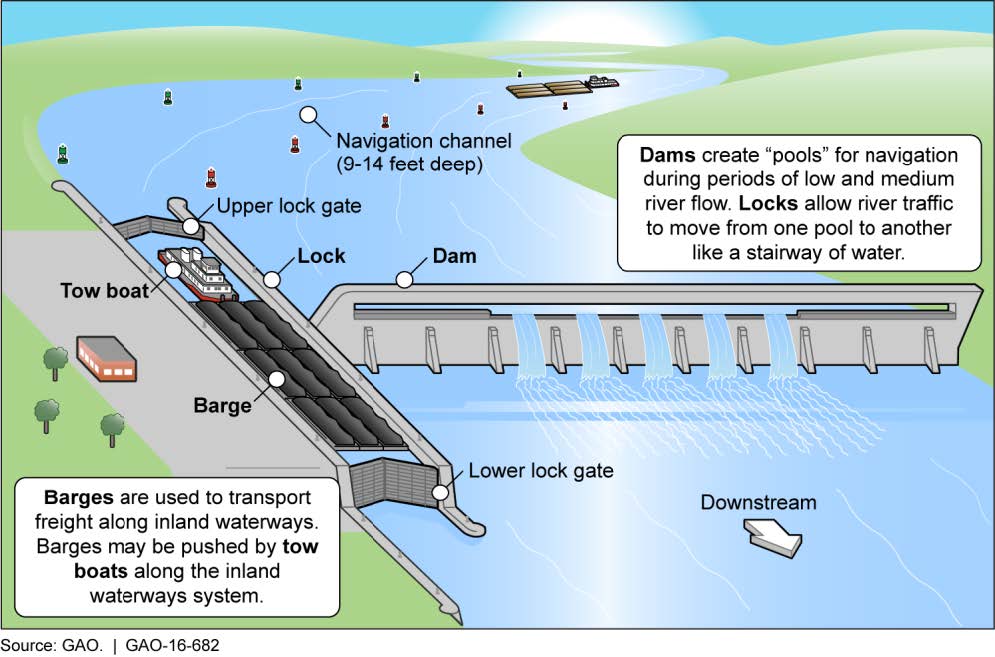
Vessel classification determines where a ship or barge can legally operate, what cargo it can carry, and under what inspection regime it must maintain its hull and machinery. For operators working across the Polish waterway system — from Gliwice Canal barges to Baltic seagoing bulkers — understanding the classification framework is a prerequisite for compliant operations.
Two Classification Domains
Vessels operating in Poland fall under one of two distinct regulatory frameworks depending on their operating zone:
- Inland waterway vessels: Governed by Polish domestic law (Ustawa z dnia 21 grudnia 2000 r. o żegludze śródlądowej) and the EU's technical standard for inland navigation vessels — ES-TRIN (European Standard laying down Technical Requirements for Inland Navigation vessels), updated in 2021.
- Seagoing vessels: Subject to SOLAS (International Convention for the Safety of Life at Sea), administered by IMO, and inspected under flag state authority. Polish-flagged seagoing vessels are supervised by the Urząd Morski (Maritime Office) in Gdynia, Szczecin, or Słupsk.
Vessels that transit between inland and coastal zones — for example, a river-sea vessel sailing from the Odra to Danish ports — must meet requirements of both frameworks simultaneously.
CEMT Waterway Classes and Corresponding Vessel Dimensions
The CEMT classification schema defines seven waterway classes based on channel geometry. Vessels are matched to these classes based on their dimensional parameters:
- Class I: Max length 38.5 m, beam 5.05 m, draught 1.2–1.4 m. Small river barges, historic type.
- Class II: Length 57 m, beam 7.2 m, draught 2.0 m. Kampine-type barge, common on the Noteć.
- Class III: Length 67 m, beam 8.2 m, draught 2.5 m. Gustav Koenigs-type. Middle Odra standard.
- Class IV: Length 85 m, beam 9.5 m, draught 2.8 m. Rhine-Herne Canal dimension. Gliwice Canal max.
- Class Va: Length 110 m, beam 11.4 m, draught 2.8–4.0 m. Large Rhine vessel. Lower Odra standard.
- Class Vb: Length 185 m (push-convoy), beam 11.4 m. Two-barge convoy. Lower Rhine, Danube.
- Class VI–VII: Large push-convoys of 3–6 barges. European main arterial waterways; not applicable in Poland.
The channelised Odra between Szczecin and Kostrzyn nad Odrą is classified as Class Va. South of Kostrzyn to Wrocław, most reaches operate at Class III–IV, limiting barge displacement and forcing operators to reduce cargo loads during average water conditions.
Polish Inland Fleet Registration
Inland vessels registered in Poland must be entered into the Rejestr Administracyjny Polskich Statków Żeglugi Śródlądowej (Administrative Register of Polish Inland Waterway Vessels), maintained by Państwowa Inspekcja Żeglugi Śródlądowej (PIZŚ). Registration requires:
- Technical inspection by an authorised classification society (e.g., Polski Rejestr Statków — PRS)
- Vessel certificate (Świadectwo Zdolności Żeglugowej) specifying the operational zone and maximum cargo
- Crew certificate conforming to the STCIN standard (Standard of Training and Certification for Inland Navigation)
- Proof of hull insurance meeting minimum statutory cover
EU Directive 2016/1629, transposed into Polish law in 2017, harmonised inland vessel certification across EU member states. A Union Inland Navigation Certificate (UINC) issued in any EU member state is recognised throughout the EU waterway network.
Seagoing Vessel Types Operating Baltic Routes from Polish Ports
The Baltic short-sea shipping market from Polish ports is served primarily by the following vessel categories:
- Handysize bulk carriers (25,000–40,000 DWT): Carry grain, coal, and fertilisers from Gdańsk and Szczecin. Typical LOA 170–190 m.
- General cargo vessels / MPP (multipurpose) (3,000–12,000 DWT): Common at Gdynia for project cargo and break-bulk.
- Container feeders (500–2,000 TEU): Operate between DCT Gdańsk and feeder hubs at Hamburg, Bremerhaven, and Rotterdam.
- Ro-Ro/ferry vessels: Stena Line operates Gdynia–Karlskrona; Finnlines operates Gdynia–Helsinki and Gdynia–Travemünde.
- Tankers (chemical, product): Calling at Gdańsk's Naftoport terminal for crude and refined product transfers.
Classification Societies Active in Poland
Seagoing vessels under Polish flag or calling regularly at Polish ports are typically classed with:
- Polski Rejestr Statków (PRS): The national classification society, recognised for both inland and seagoing vessels. Headquarters in Gdańsk.
- Bureau Veritas (BV): Active in Gdańsk for container feeders and chemical tankers.
- Det Norske Veritas (DNV): Covers bulk carriers and Ro-Ro vessels frequently calling at Gdynia and Szczecin.
- Lloyd's Register (LR): Present for larger Handymax and Panamax-class vessels.
All major classification societies operating in Poland are IACS (International Association of Classification Societies) members, meaning their certificates are mutually recognised under port state control procedures.
PRS publishes current classification rules and technical standards in Polish and English at prs.pl. Inland vessel certificates are valid for a maximum of five years, after which a full hull survey is required.