Poland's freight transport network relies on three main Baltic seaports — Gdańsk, Gdynia, and the Szczecin-Świnoujście complex — which together handle the bulk of the country's international cargo. Each of these ports functions as a gateway node, connecting short-sea Baltic shipping lanes to domestic river corridors and rail transfer points that reach the Polish interior.
Gdańsk: Deep-Water Terminal and Container Hub
The Port of Gdańsk operates two main areas: the Inner Port, handling bulk cargo such as grain, coal, and liquid fuels, and the Deepwater Container Terminal (DCT) on the outer roadstead, which is capable of receiving Ultra Large Container Vessels (ULCVs) with a draught of up to 16.5 metres. DCT Gdańsk processed over 3.4 million TEU in 2023, ranking among the five largest container ports in the Baltic Sea region.
From Gdańsk, containerised freight reaches Warsaw and Łódź via rail intermodal connections operated through the PKP Cargo network. Road hauliers typically follow the A1 motorway south. River freight from the Vistula basin arrives at Gdańsk primarily from the Bydgoszcz node and the Włocławek reach, though low water levels in summer months frequently restrict commercial barge operations on the lower Vistula.
The Vistula (Wisła) carries approximately 0.8 million tonnes of freight per year. This figure represents a fraction of its theoretical capacity — a consequence of the river's highly variable seasonal depth and the absence of continuous waterway-class infrastructure along its length.
Gdynia: General Cargo and Ferry Terminal
Gdynia Port specialises in Ro-Ro (roll-on/roll-off) traffic and general cargo. Its ferry terminal handles regular scheduled sailings to Karlskrona (Sweden) and Helsinki via Stena Line and Finnlines. The Baltic Container Terminal (BCT) within Gdynia handles approximately 750,000 TEU annually, focusing on feeder vessels from hub ports rather than direct deep-sea calls.
Gdynia's general cargo quays are equipped to handle project cargo — oversized industrial machinery, wind turbine components, and steel coils — making the port a preferred point of entry for Polish manufacturing imports. The port's proximity to Gdańsk creates a dual-port cluster that together accounts for roughly 60% of Poland's total seaborne freight volume.
Szczecin-Świnoujście: The Western Gateway
The Szczecin-Świnoujście port complex sits at the mouth of the Odra River, connecting Baltic maritime routes to the E30 inland waterway axis that runs southward through Wrocław toward the Czech border. Świnoujście handles LNG imports at one of Central Europe's only LNG terminals, with a regasification capacity that serves pipeline distribution across the region.
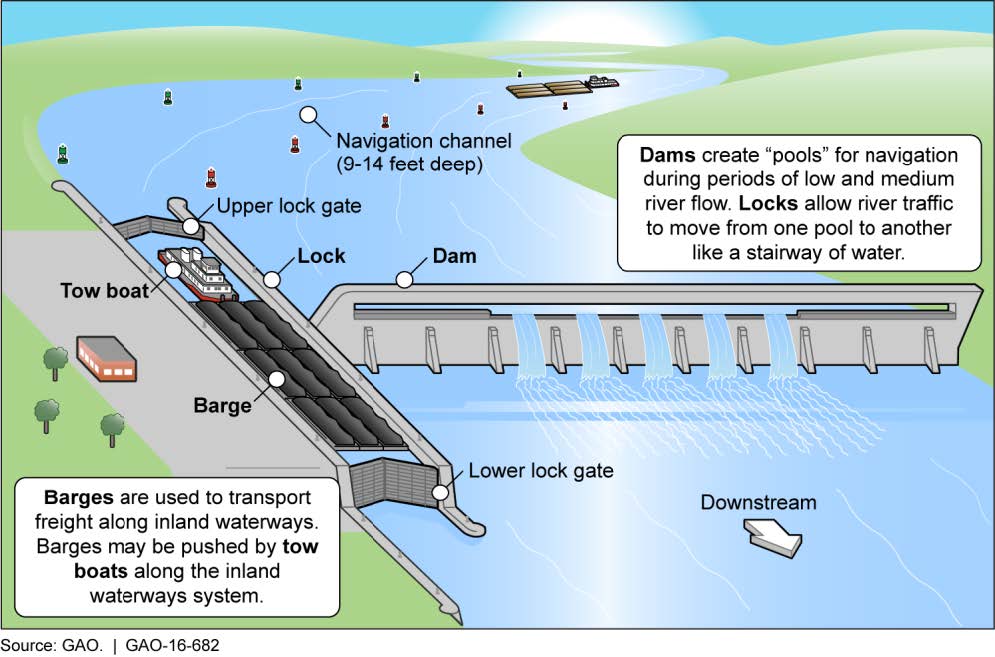
Szczecin's inner port, reached via the 67-kilometre Szczecin roadstead, specialises in bulk cargo, timber, and steel products. Regular barge connections operate between Szczecin and Wrocław Port (Wrocławski Węzeł Wodny), typically using push-convoys of two to three barges with a combined capacity of 3,000–4,500 tonnes. Transit time varies from four to eight days depending on water levels and lock scheduling along the Odra.
Inland Freight Corridors
Two river systems form the backbone of Polish inland freight routing:
- Odra corridor: Connecting Szczecin to Wrocław and the Gliwice Canal, which links to the Upper Silesian industrial basin. The Gliwice Canal (41.2 km) was constructed in 1939 and reaches class Va waterway parameters at its terminus, permitting barges of up to 1,000 tonnes displacement.
- Vistula corridor: Running from the Gdańsk Bay southward through Bydgoszcz to Warsaw. Commercial navigation is limited to the lower section below Bydgoszcz due to insufficient depth and the absence of channelisation works on the middle and upper Vistula reaches.
The Bydgoszcz Waterway Junction (Bydgoski Węzeł Wodny) connects the Brda river, the Bydgoszcz Canal, and the Noteć river — forming the only functional cross-link between the Vistula and Odra basins navigable by commercial barges.
Route Documentation Requirements
Cargo vessels operating on Polish inland waterways must carry a vessel certificate issued by Państwowa Inspekcja Żeglugi Śródlądowej (State Inland Navigation Inspectorate). Cargo manifests follow the CMR convention for road segments and the DAT (Delivered at Terminal) Incoterms structure for port handovers. Hazardous goods are subject to ADN regulations (European Agreement on the Carriage of Dangerous Goods by Inland Waterways), which Poland ratified in 2011.
For Baltic seaports, cargo documentation follows IMO FAL Convention procedures, with electronic submission via PortSingle Window now mandatory for all commercial vessels calling at Gdańsk and Gdynia since January 2024.