A structured overview of Poland's freight waterways, port loading procedures, vessel standards, and the logistics infrastructure connecting the Odra and Vistula basins to Baltic seaports.
By the numbers
Articles
Detailed breakdowns of the routes, regulations, and technical parameters that define freight movement on Polish waters.
An overview of how freight moves from Gdańsk, Gdynia, and Szczecin through domestic river corridors to central Polish logistics hubs.
Read more
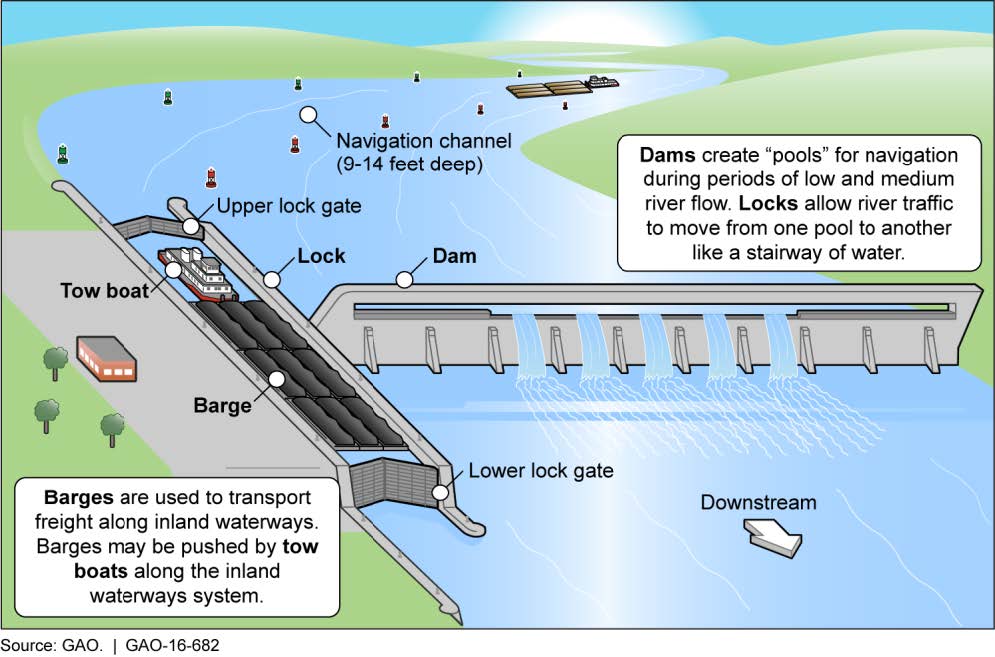
How barges operate on the Odra and Vistula, what lock systems they pass through, and how seasonal water levels affect route availability.
Read more
A structured breakdown of CEMT waterway classes, vessel tonnage categories, and how European standards apply to Polish inland fleet registration.
Read moreKey Topics
ElmHarbor documents the operational and regulatory framework of freight transport on Poland's waterways and ports.
Berth allocation, cargo manifests, crane scheduling, and documentation requirements for bulk and containerised freight at Polish inland ports.
Navigational parameters of the Odra, Vistula, and Warta — including channel depths, lock dimensions, and seasonal restrictions recorded by RZGW.
CEMT classification, Polish inland vessel registry requirements, freeboard regulations, and the technical norms that govern fleet operations under EU Directive 2016/1629.
Convoy formation rules, push-tug arrangements, maximum permitted load per waterway class, and how cargo is secured for transit through lock chambers.
How the ports of Gdańsk, Gdynia, and Szczecin-Świnoujście connect to European short-sea shipping networks and intermodal rail-water transfer points.
Polish waterway law, Act of 21 December 2000, PIANC guidelines, and the classification scheme maintained by Państwowa Inspekcja Żeglugi Śródlądowej.
Get in touch
Questions about a specific waterway corridor, port procedure, or vessel class? Use the form below.
For corrections, source citations, or questions about content accuracy, contact the editorial team directly.